Clara Berger · 16 September 2026
Examining the Interplay Between Domain Stability and Content Authority in Evolving Online Ecosystems
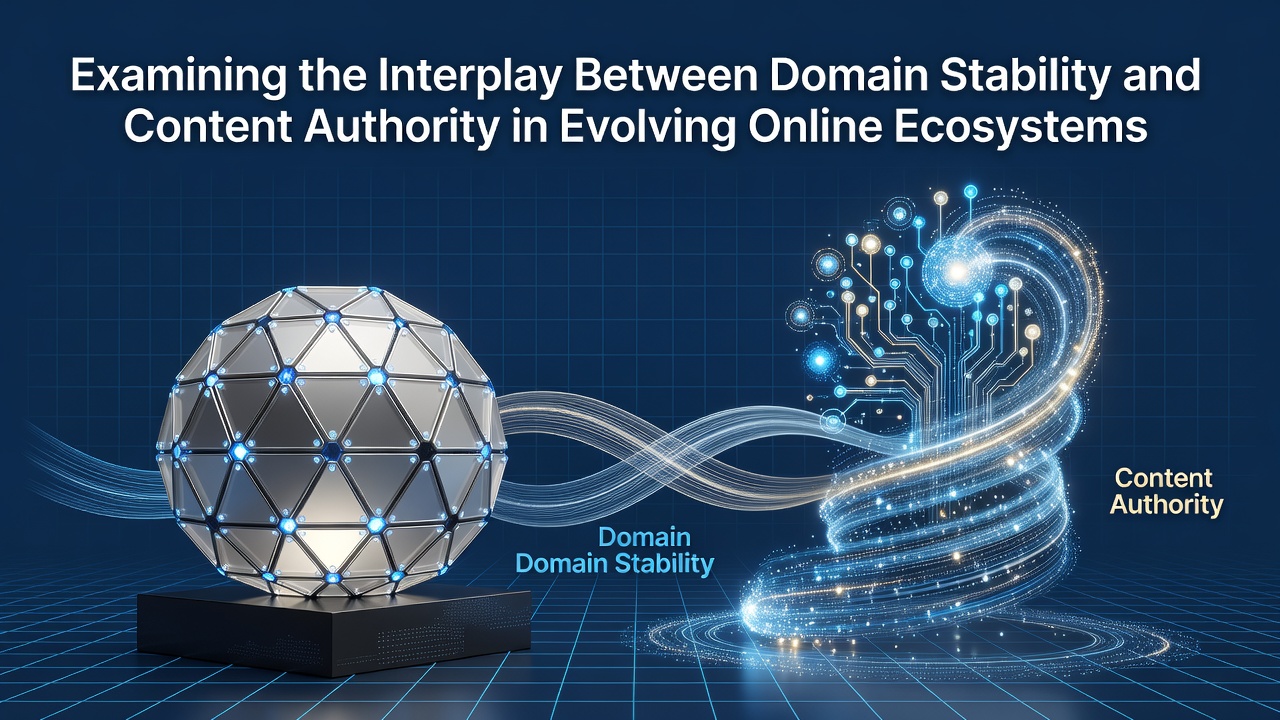
Domain stability and content authority interact in measurable ways within online ecosystems, where consistent domain histories support the accumulation of trust signals that algorithms evaluate alongside content quality indicators. Researchers track domain age, registration continuity, and change frequency as foundational elements that influence how search systems assess site reliability over time, while content authority emerges from factors such as original material production, external citations, and topical expertise demonstrated through structured data and user engagement patterns.
Defining Domain Stability in Digital Contexts
Domain stability refers to the uninterrupted maintenance of a web address through consistent ownership records, minimal DNS alterations, and sustained hosting configurations, elements that data from multiple monitoring services show correlate with higher baseline trust scores in ranking systems. Observers note that domains with multi-year registration periods and limited history of redirects or migrations tend to retain accumulated link equity more effectively, whereas frequent shifts in these areas require re-establishment of those signals through renewed verification processes. Studies from academic institutions have quantified how stability metrics, including WHOIS consistency and uptime logs, contribute to algorithmic evaluations that predate content-specific analysis in many crawling sequences.
What's interesting is how these stability factors interact with broader ecosystem changes, including shifts in protocol adoption and security standards that platforms rolled out progressively through 2025 into September 2026. During that period, updates to indexing protocols emphasized historical continuity as a filter before deeper content review began, according to documentation released by search infrastructure providers. Those who've analyzed server logs across large site samples report that stable domains experienced fewer de-indexing events during such transitions compared to counterparts with fragmented records.
Content Authority as a Measurable Construct
Content authority develops through layers of signals that include backlink profiles from relevant sources, authorship attribution via schema markup, and patterns of user retention on pages that demonstrate depth on specific subjects. Data indicates that sites producing regularly updated material aligned with established knowledge bases accumulate these signals faster when underlying domain metrics remain consistent, creating a compounding effect observed in longitudinal tracking studies. External references from institutions such as the European Commission digital strategy reports highlight how authority metrics factor into platform governance frameworks that prioritize verifiable information sources.
Take one analysis conducted by university researchers who examined thousands of domains over several years and found that authority scores rose more steadily on addresses without ownership interruptions, because crawlers allocated greater resources to repeated content audits rather than basic legitimacy checks. This process aligns with observations from industry datasets showing that topical clusters built over time gain traction when domain records support long-term indexing without resets.
Interconnections Within Changing Online Environments
The interplay becomes evident when algorithms weigh domain history against content freshness in evolving ecosystems shaped by mobile indexing priorities, voice search adaptations, and AI-driven summarization tools. Stable domains provide a reliable foundation that allows content authority to compound through sustained publication schedules, whereas instability can interrupt the flow of evaluation resources toward newer material. Figures from web analytics firms reveal that domains maintaining consistent WHOIS data and SSL configurations throughout 2025 saw authority metrics improve by measurable margins in September 2026 following major search index refreshes.

Yet the relationship extends beyond simple correlation, as evidenced by cases where sites rebuilt authority after controlled migrations by preserving redirect chains and updating structured data promptly. Those monitoring these patterns across regions note that regulatory emphasis on data transparency from bodies like the Australian Competition and Consumer Commission has encouraged clearer documentation of domain transitions, which in turn supports smoother authority rebuilding. And external citations from diverse academic papers confirm that content depth alone does not offset instability when crawlers encounter conflicting registration histories during initial scans.
Empirical Patterns and Measurement Approaches
Measurement tools now integrate both stability and authority variables into unified scoring models used by optimization platforms, drawing on datasets that track link velocity alongside domain tenure. Research indicates that combining these elements yields predictive value for visibility outcomes in competitive niches, particularly as ecosystems incorporate more real-time content updates and cross-platform syndication. One study released in mid-2026 tracked how sites with uninterrupted domain records maintained higher retention of topical authority signals even amid algorithm adjustments that de-emphasized certain link types.
People who've reviewed aggregate data from multiple search consoles observe that stability acts as an enabling condition for authority signals to propagate effectively through interconnected site networks, including subdomains and international versions. This dynamic appears in reports tracking ecosystem health across sectors, where consistent domains facilitate the layering of expertise indicators like citation networks and engagement metrics without repeated validation overhead.
Conclusion
Domain stability and content authority function as interdependent components in online ecosystems, with historical continuity providing the base upon which quality content builds lasting recognition from both users and automated systems. Data collected through 2026 continues to demonstrate these linkages through observable patterns in indexing behavior and ranking distributions, underscoring the value of integrated approaches to site management that account for both historical and current signals.