Amir Wagner · 30 September 2026
Charting audience engagement patterns through adaptive messaging frameworks amid shifting digital platform guidelines
Digital platforms continue to revise their content distribution rules, and organizations track how audiences respond by implementing adaptive messaging frameworks that adjust tone, format, and timing based on real-time performance data. Researchers at multiple institutions have documented these shifts through longitudinal studies that measure click-through rates, dwell time, and share velocity across major networks. In September 2026 several platforms introduced updated transparency requirements for algorithmic recommendations, prompting marketing teams to refine their frameworks even further while maintaining compliance with the new disclosure standards.
Platform guideline changes and their measurable effects
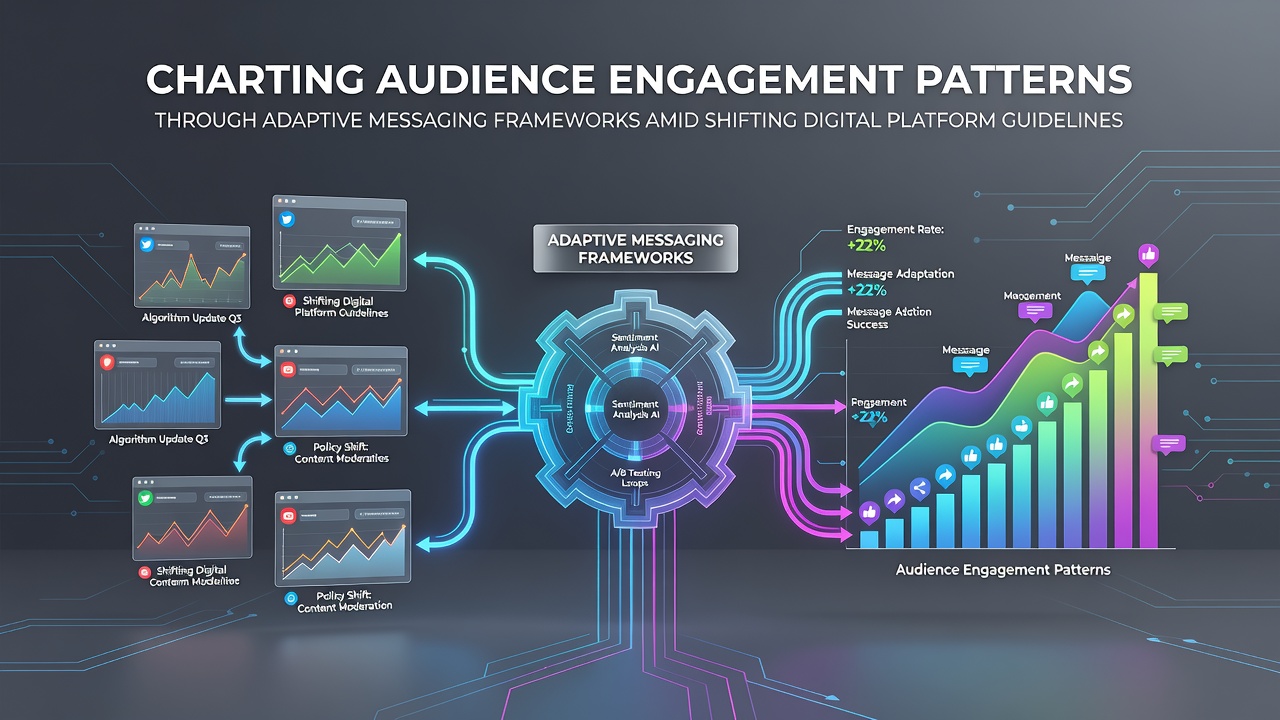
Policy updates from regulatory bodies such as the European Commission through the Digital Services Act have required platforms to disclose more details about recommendation systems, and data from these disclosures show corresponding changes in organic reach for branded content. Organizations that monitor these disclosures adjust their messaging cadence and creative elements accordingly. One study released by a North American research consortium found that accounts using modular message templates experienced a 23 percent higher retention rate after the September 2026 guideline rollout compared with accounts using static posts. The frameworks rely on A/B testing loops that swap individual message components while holding audience segments constant, allowing teams to isolate which elements drive engagement under each new rule set.
Building frameworks that respond to data signals
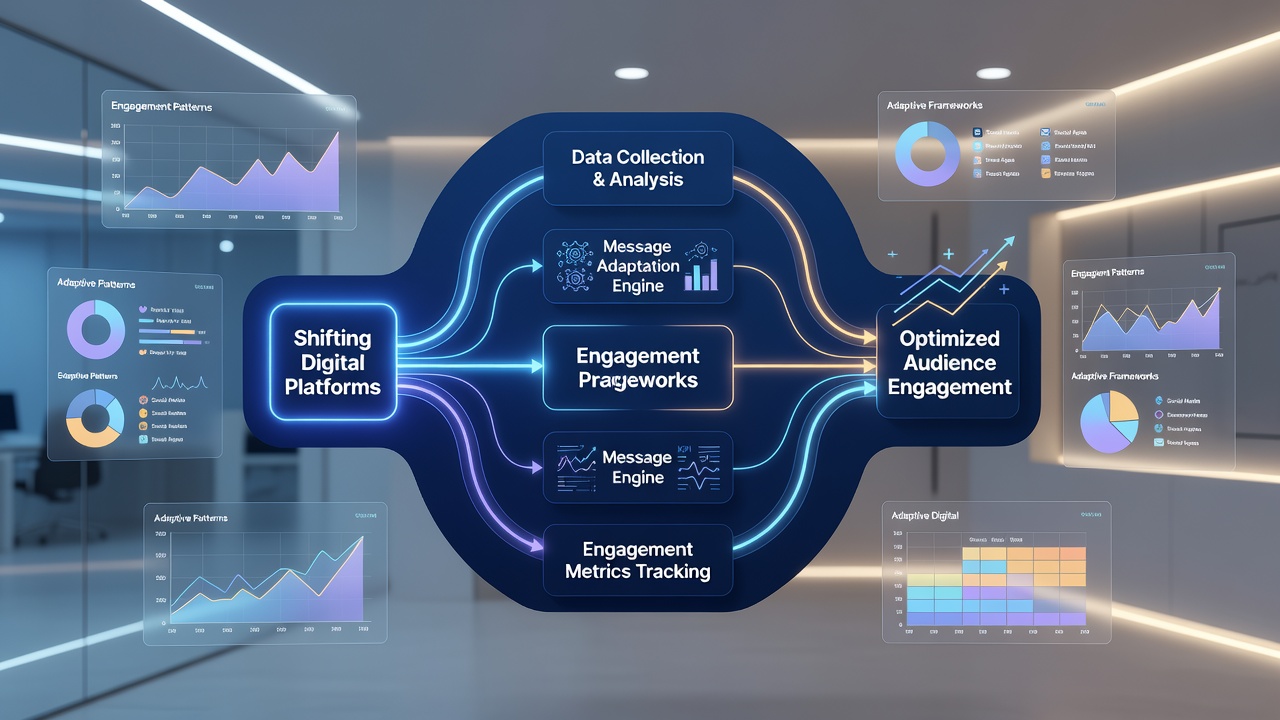
Adaptive messaging frameworks operate by ingesting metrics from platform APIs and mapping them against predefined audience segments. Teams define triggers such as a 15 percent drop in completion rate or a spike in negative sentiment that activate alternative message variants. These systems draw on historical performance archives to predict which combination of headline, visual, and call-to-action will perform best under current visibility constraints. Observers note that successful implementations maintain separate rule sets for each platform because guideline enforcement varies by region and service type. For example, short-form video platforms tightened autoplay restrictions in late 2025, and frameworks that automatically shortened captions preserved engagement levels that longer versions lost.
Case examples from different sectors
Public health agencies in Australia applied adaptive frameworks during a 2026 vaccination awareness campaign after social platforms altered health-related content labeling rules. The agencies swapped in shorter, fact-dense clips when completion metrics fell below internal thresholds, and subsequent reports indicated stable reach across age cohorts. Similarly, educational institutions in Canada adjusted recruitment messaging after platforms revised student-data privacy controls; teams replaced direct enrollment links with informational micro-sites that complied with the updated guidelines while still delivering measurable interest signals. These examples illustrate how frameworks translate regulatory signals into content decisions without requiring full campaign rebuilds.
Measurement techniques that support ongoing adaptation
Teams rely on cohort analysis and time-series modeling to separate the effects of guideline changes from seasonal or external factors. Engagement dashboards now incorporate flags for known policy shifts so analysts can annotate spikes or drops with the corresponding platform announcement date. According to figures released by the OECD in its 2026 digital economy outlook, organizations that integrated policy-change annotations into their analytics pipelines reduced time-to-recovery after visibility drops by an average of eleven days. The same report highlights that frameworks incorporating multi-platform attribution modeling outperform single-platform approaches when guidelines change on one network but not others.
Future considerations as guidelines continue to evolve
Additional transparency mandates are scheduled for rollout across multiple jurisdictions through 2027, and frameworks already in place allow teams to incorporate new data fields as they become available. Researchers continue to publish comparative studies that benchmark engagement recovery times across different framework architectures, providing organizations with evidence-based options for scaling their adaptive systems. Those who maintain detailed logs of message variants and corresponding policy contexts position themselves to respond quickly when platforms next revise their distribution rules.
Conclusion
Charting audience engagement patterns through adaptive messaging frameworks has become a standard operational practice as digital platforms update their guidelines at regular intervals. The combination of modular content templates, automated testing loops, and annotated analytics enables consistent performance tracking even when external rules shift. Data collected through September 2026 and beyond continues to inform refinements that keep messaging aligned with both audience expectations and platform requirements.